 Photo: TSE Enns
Frauenturm mit Johanniterkapelle
Enns, Upper Austria
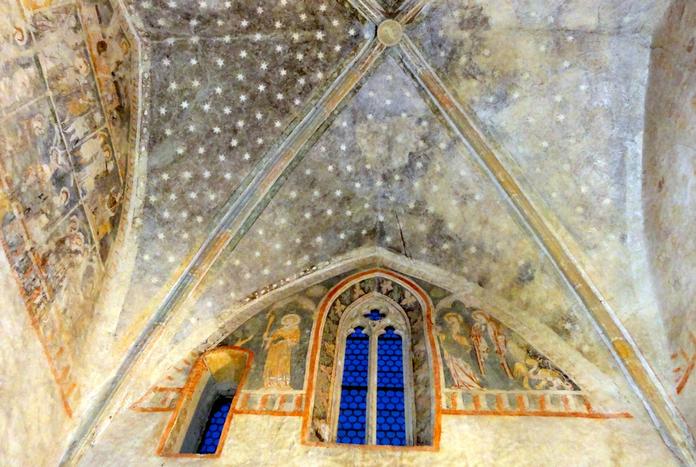
The lower part of the tower features large ashlar stones that bear a resemblance to the lower zone of the tower of St. Laurenz Basilica. It is therefore not to be ruled out that these are stones from the destroyed Lauriacum. The tower shows raised crosses formed in the plaster on the south and north sides, which are interpreted in research as Johanniter (Knights Hospitaller) crosses. The Wallseer, who received the castle guard, court, and toll of Enns as a pledge from the sovereign in 1309, established a pilgrim hospice in Enns between 1326 and 1338. It consisted of the hospice and the chapel in the Frauenturm. Enns was then located on the European Way of St. James, which came from Gdansk via Prague and Freistadt and continued westwards from Enns through Switzerland, France, and northern Spain to Santiago de Compostela. The chapel is reached via a staircase on the outside of the tower, typical for the layout of a Johanniter hospice. (Visits during city tours, otherwise key for 15 minutes at the tourist information.) The interior impresses with its mixed-media wall paintings, attributed to the St. Florian school of painting and dated between 1320 and 1360. The Gothic vault has a blue, starry sky, cross ribs ornamented in different colors with a keystone. The south wall: To the left of the window, St. Laurentius, patron saint of the poor and needy. First figure to the right of the window: St. Dorothea, patron saint of gardeners, newlyweds, and women in childbed. She carries a basket with apples and roses as an attribute. Second figure: St. Martha of Bethany, patron saint of housewives, cooks, and maids. Her attribute is the dragon Tarascus, which, according to legend, she defeated in the Rhône Valley with a cross and holy water and is said to have led on her belt to Arles. The east wall: Eight scenes of the Passion and Resurrection of Jesus arranged in three rows one above the other. However, the chronologically last event (Resurrection) of the cycle is placed at the top. Symbolic meaning: Victory over suffering and death through the Redeemer. The individual pictures show the following scenes: Resurrection, the Prayer on the Mount of Olives, Betrayal of Judas, Christ before Pilate, Flagellation of Christ, Carrying of the Cross, Crucifixion, and Deposition from the Cross. The north wall: Christ crucified on the Tree of Life. The branches form numerous medallions, in which there are small busts, probably prophets and ancestors of Christ. The west wall: Numerous, poorly preserved medallions with busts of unknown persons (depictions of saints?). Visits as part of a city tour!! Registration: Tourismus & Stadtmarketing Enns 07223/82777, info.enns@oberoesterreich.at, www.enns.at Autobahn A1 left to the roundabout, 1st exit then left, straight across the Hauptplatz into Mauthausner Straße - on the left side
Map & directions
Anzeige
Events nearby
Upcoming events within 10 km.


Experiences
Tours & activities in Oberösterreich
Guided tours, tickets and experiences in Oberösterreich — bookable via GetYourGuide.