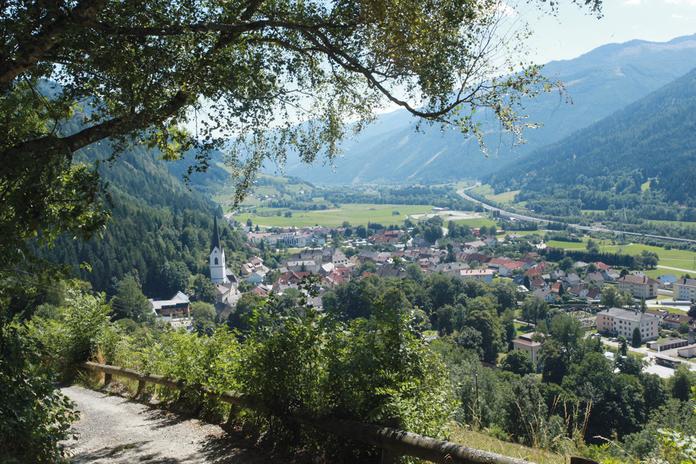
 Photo: TV Erzberg Leoben · K. Wassler
Sebastiankirche Kalwang
Kalwang, Styria
The church, dedicated to St. Sebastian, the patron saint of the plague, was built in 1495 and enlarged in 1778. Especially after the Turkish invasion in 1480, the plague spread, and chapels in honor of the patron saint of the plague were erected everywhere in the country, where Saint Sebastian was implored for help in times of plague. This was also the case in Kalwang. When a major cattle plague in 1766 devastated the livestock in the Liesing and Palten valleys, and the towns of Kammern, Mautern, Kalwang, Wald, and Gaishorn were miraculously spared, devotion to Mary also increased. People attributed this miraculous help to the intercession of Mary from Sebastianiberg. The miners from the copper mines in Kurzen Teichen and Langen Teichen also gladly sought refuge with Mary. Two depictions in the church bear witness to this: miners under the protective mantle of St. Mary as well as St. Barbara. Opposite the Sebastianikirche stands an 18th-century chapel, which originally served as a miners' chapel, as at that time the Admont Abbey miners from the copper mines in Teichen also attended the festive services on Sebastianiberg. In the autumn of 1889, this former miners' brotherhood chapel was redesigned. A Lourdes statue by Stuffler from Gröden in Tyrol was acquired, the grotto itself was made of tufa and adorned with beautiful stalactites, and the entire chapel was completely redesigned. The spring that flowed out in the chapel was also newly enclosed. Popular belief attributes a certain healing power to its water for eye ailments. The popularity of the Sebastianikirche continues to extend far beyond Kalwang.
Opening hours & season
- 01.01.2021 – 01.01.2030dailyopen all day
Map & directions
Events nearby
Upcoming events within 10 km.

Experiences
Tours & activities in Steiermark
Guided tours, tickets and experiences in Steiermark — bookable via GetYourGuide.