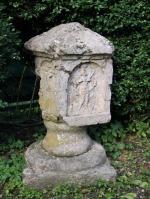
Peststein
Hof bei Salzburg, Salzburg
What could this stone witness, most likely more than 500 years old, tell us? In the years 1465, 1482, and 1495, the plague raged particularly severely in our country. It was introduced from Asia in the Late Middle Ages and spread explosively across Europe. Its symptoms: outbreak only 40 days after infection, first sneezing and severe coughing, then violent swelling of the glands, black-blue boils, death within a few days. Attempts were made to combat the epidemic with rigorous quarantine measures: houses with sick people were bricked up, armed guards erected roadblocks. If a sick person was dying, this was signaled by hanging out a white cloth. Thereupon the priest came, took confession through an open window, and handed over the host on a long-handled spoon. The dead were pulled out of the houses with barbed hooks attached to poles, lifted onto wagons, and placed into pits without formalities. After filling these mass graves, wooden crosses were stuck into the ground, which were sometimes later replaced by stone monuments.
Opening hours & season
- 14.08.2020 – 31.12.2070daily06:00–23:00
Map & directions
Events nearby
Upcoming events within 10 km.


Experiences
Tours & activities in Salzburg
Guided tours, tickets and experiences in Salzburg — bookable via GetYourGuide.