 Photo: Künstlerstadt Gmünd
Hauptplatz in der Künstlerstadt Gmünd
Gmünd in Kärnten, Carinthia
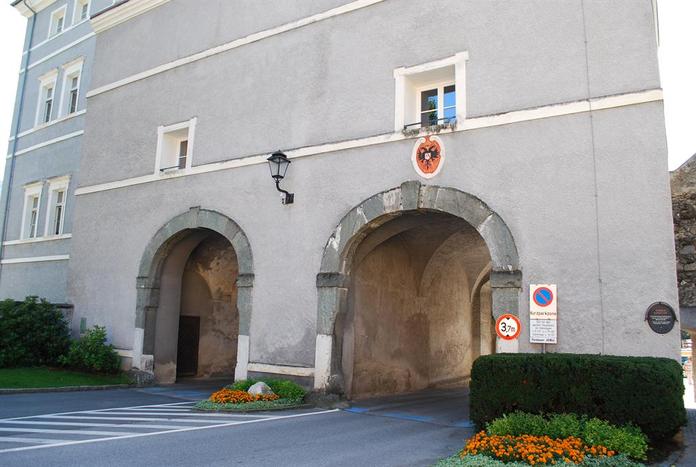
Name: Main Square in the Artists' Town of Gmünd Description: There is a lot to discover on and around the Main Square in the Artists' Town of Gmünd:City Gates and Dam WallGmünd received its town charter as early as 1346, making it one of the oldest towns in Carinthia.Around this time, the town also received its town wall (expanded again after the great town fire in 1504) and its four town gates.Even today, one can enter the town through one of the four gates.Nepomuk ColumnAt the fountain on the lower Main Square of Gmünd stands a saint on a tall column. It is the statue of St. John Nepomuk, commemorating a man who was born about 700 years ago (1350) in Bohemia (Slovakia). His name was Johannes Wolfflin, after his father. His parents died early, so he was raised by monks. He studied and became a notary and priest.He was a wise, just, and eloquent man and soon became known throughout the country for his sermons. He was also an advisor to the king for some time. However, when the king once wanted to know what the queen had confessed to him, and Nepomuk refused, the king had him tortured and thrown from a bridge into the Vltava River.Earthquake ColumnDecember 4, 1690A severe earthquake in Carinthia. In Gmünd, according to oral tradition, 38 houses are said to have collapsed, and a corner of the old castle fell down. An earthquake column was erected by the municipality.Pillory“Pillorying” was imposed by the regional court and was one of the most common honorary punishments in the Middle Ages. Since 1947, the pillory has stood on the Main Square near the Upper Town Gate.Fourteen years after its erection, on September 11, 1600, “they” (in the course of the Counter-Reformation) “lit a large fire early on Monday by the pillory and masterfully burned the acquired (Protestant) books.” From more recent times, we know about the pillory: The Gmünd citizen Hubert Rudiferia, who died in 1909, reports in his diary for the year 1874 that the pillory was purchased by the property owner Oswald Lackner and used as a gatepost next to the so-called Galgenbühel, the place of execution of the Gmünd regional court. In 1926, this monument was erected behind the Upper Town Gate and in 1938 next to the parish church. Since 1947, the pillory has stood on the Main Square near the Upper Town Gate.Altweiberkapelle (Old Women's Chapel) - Rest Stop on the Way to KalvarienbergThe Altweiberkapelle was endowed in 1629 by the Raitenauers and built in the first half of the 17th century by Anton Durregger. The painting in the chapel shows the Crucifixion and the altarpiece depicts Christ on the Mount of Olives. The crypt of the Counts Lodron is located behind the chapel. It was built in 1840 and was constructed into the slope. Thirteen members of the Lodron family were buried here. From the Altweiberkapelle, eight Stations of the Cross lead to the Kalvarienbergkapelle. The paintings were repainted in 1966 by Peter Brandstätter.Toll Chapel in the Lower SuburbThe year of construction of the chapel is not known; its location at the toll house on the old imperial road, which led here through the Lower Suburb and over the Malta or Town Bridge to the Main Square, suggests an older age than the current chapel would indicate. The first mention is found on a drawing from 1790 (original in Gmünd Town Hall) – the compass needle points exactly to the chapel.
Map & directions
Events nearby
Upcoming events within 10 km.


Experiences
Tours & activities in Kärnten
Guided tours, tickets and experiences in Kärnten — bookable via GetYourGuide.