 Photo: photo-austria/Hans Simonlehner
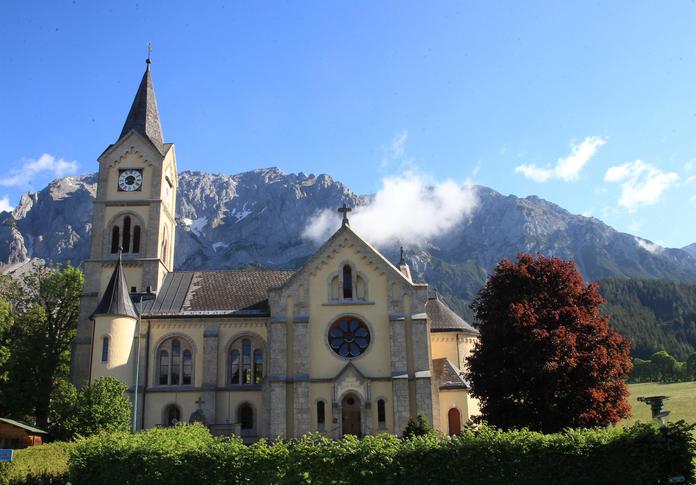
Evangelische Kirche in Ramsau Ort
Ramsau am Dachstein, Styria
The church was built from 1888 to 1895, according to the plans of architect Hans Kieser from Nuremberg. The church is built in Neo-Romanesque style with a classic cross-shaped floor plan. The nave measures 39 m, the transept 24.5 m. The church tower is 42 m high and had to be founded on 9 m long wooden piles to achieve the necessary stability on the loose alluvial subsoil. The elaborate foundation of the entire church, which significantly increased construction costs from the outset, is just one of many difficulties that the small, at that time purely rural Ramsau parish community had to overcome with courage and willingness to make sacrifices. The stone material for the church building was quarried in the Kramllahn in Ramsau, hewn there, and transported to the construction site in winter by ox-drawn sleds as Robotarbeit (compulsory labor). This stone is known for its hardness and was also used for the Ramsau millstones. The masons and stonemasons were partly Italians, who started their work in spring and left again in autumn. The church receives its special character inside from its galleries, which are made entirely of wood, provided free of charge by the farmers. The altar shows a painting of the Crucified (after Rubens), the altar side panels depict the apostles John and Paul, and the organ is a work by Hopfwieser from Graz. Many parts of the church's furnishings, such as the altarpiece, baptismal font, windows, and bells, were financed primarily by donations. The three large Bochum cast steel bells had to be transported through the Rössinggraben to Ramsau, as the road from Schladming to Ramsau was only developed later. The great help of the Gustav-Adolf-Verein, the diligence, and the financial sacrifices of the community of 1300 souls finally made it possible to complete the beautiful church with its 750 seats after about seven years of construction. On August 15, 1895, the great day arrived when the Ramsau Protestants could move into their church in a solemn procession - to the praise and honor of God! In lasting gratitude and recognition, all those who contributed to the success of the great church building in a time more austere than today should be remembered.
Map & directions
Anzeige
Events nearby
Upcoming events within 10 km.



Experiences
Tours & activities in Steiermark
Guided tours, tickets and experiences in Steiermark — bookable via GetYourGuide.