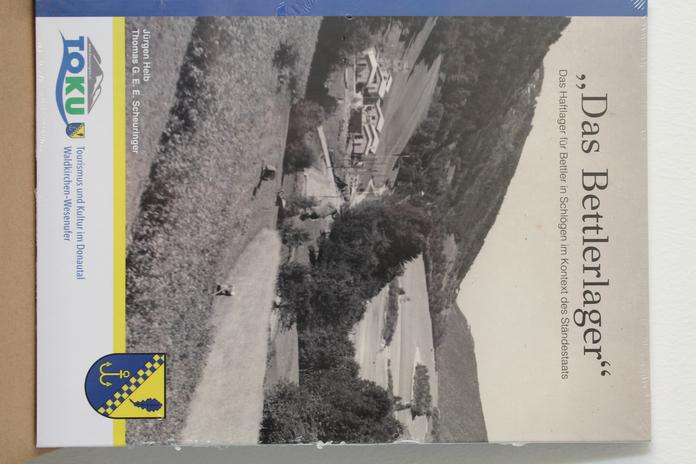
 Photo: TOKU
BETTLERLAGER SCHLÖGEN
Waldkirchen, Upper Austria
On today's Nibelungenstraße in the village of Vornwald (municipality of Waldkirchen am Wesen), the so-called "Bettlerlager Schlögen" (Beggars' Camp Schlögen) was located between 1935 and 1938. Nothing remains today of this largely unknown contemporary historical phenomenon of a "detention camp for beggars," which was established during the Austro-fascist corporate state. It reflects the history of economic misery, political violence, and oppression; above all, it is the history of poverty and how it was dealt with. Finally, in this place, we symptomatically recognize the repressive character of the corporate state of Austria from 1934 - 1938. The period between the two world wars was characterized by economic instability, high unemployment, and, after the collapse of the Austro-Hungarian Monarchy, a democracy that was by no means yet consolidated. Between the two political camps, the ruling bourgeois and the opposition socialist, irreconcilable antagonism grew. As a result of unemployment and simultaneous cuts in social benefits, the problem of mass begging arose. The government therefore considered taking police measures against it. The stated intention was to protect the population from the "nuisance of beggars and vagrants" and to have a deterrent effect on those who were impoverished through no fault of their own, as well as on professional beggars. Thus, on July 9, 1935, the Upper Austrian "Detention Camp Law" was enacted, which created the legal basis for the establishment of the "Detention Camp for Beggars in Schlögen." The choice of location was determined by the expansion work on the Nibelungenstraße, which had been planned for several years and required the deployment of many workers. After the completion of the beggars' camp, so-called roundups took place throughout the federal state. Those not entitled to residency in Upper Austria were deported, and the others were imprisoned for up to six weeks in the camp in Vornwald and subjected to forced labor. Based on the preserved work lists, around 3,000 prisoners could be registered in road construction. The simultaneous occupancy of the camp was a maximum of just over 200 people. Of the planned 48 hours of weekly working time, only about 42 hours per week were actually worked. The prisoners received a small wage for this, which was paid out in kind after the end of their detention. Some of them also participated in archaeological excavations in the area of the Roman civilian settlement (today's campsite) between October 6 and 20, 1937.
Map & directions
Events nearby
Upcoming events within 10 km.


Experiences
Tours & activities in Oberösterreich
Guided tours, tickets and experiences in Oberösterreich — bookable via GetYourGuide.