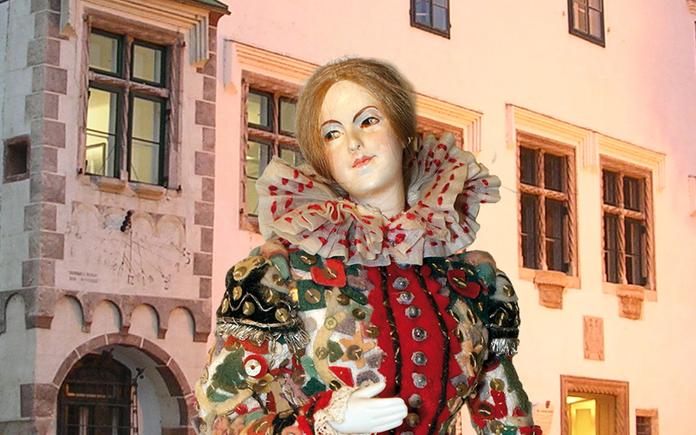
 Photo: Ausseer Kammerhofmuseum
Ausseer Kammerhofmuseum
Bad Aussee, Styria
Cultural jewel of the Ausseerland The Kammerhof dates from the late 14th century and is one of the most important secular buildings in Upper Styria. Today, the former salt office building houses valuable historical collections. The most beautiful exhibits are presented on 600 square meters of exhibition space. The annually re-designed special exhibitions in the Kammerhofmuseum also make the museum a true cultural jewel in the Ausseerland. Permanent exhibition of the historical collection Archaeology For a good decade and a half, the archaeological working group Salzkammergut has been unearthing finds from the Copper Age, Urnfield period, Hallstatt and La Tène periods up to the Roman Imperial period. The most recent excavations along the pack trail, which led from Hallstatt through the Koppen to the south, yielded sensational results. Salt & Local History The development of Bad Aussee is closely linked to the salt industry to the present day. From the Middle Ages to the late 20th century, "white gold" formed the economic basis of the town and was also responsible for Aussee's rise as a spa town. In 1911, the spa town of Aussee was granted the title "Bad". Archduke Johann & Anna Plochl The exhibition is dedicated not only to the well-known love story between the Habsburg Archduke Johann and the common Aussee woman Anna Plochl, but also shows Johann as a revolutionary and humanist. The emperor's brother carried out sustainable reforms, especially in Styria. The exhibition conveys a deep impression of the work of the great visionary, of his love for the common people and for nature. Kaisersaal (Emperor's Hall) The "splendidly furnished" Kaisersaal hosted "High Princely Graces" - Friedrich III, Maximilian I and Archduke Johann were guests here. The historically significant wall paintings, created around the middle of the 18th century, depict the princely production sites of the salt industry. The Ausseerland - From Spa Region to Tourist Destination and Museum Cinema This exhibition describes the development of tourism in the Ausseerland from the spa system of the mid-19th century, to the summer retreat region of the nobility and bourgeoisie, through the period of tourism between the wars and immediately after the war, to today's cultural and health tourism. The exhibition was designed with great taste. It is rich in pictures and graphics and equipped with original exhibits. Attached to the exhibition is the new museum cinema, which gives visitors insights into the lives of people in the Ausseerland before the war (excerpts from films by Hans Gielge, contributions from the Austrian Film Archive...), into the world of traditional costume, craftsmanship, etc. Aussee Traditional Costume Craftsmanship No region in Austria is as identified with its "Gwand" (clothing) as the Ausseerland. In three rooms, visitors are shown the origins of probably the most becoming traditional costume in the Alpine region. This museum area was designed by Aussee traditional costume craftsmen for the 2005 Provincial Exhibition. Its centerpiece is the exhibition of magnificent old hand-printing blocks, which were acquired by the museum association in 2003. Folk Music The exhibition, completed in spring 2008, is dedicated to the well-known and popular Aussee folk music, its history and its different forms of expression. Most of the exhibits - sheet music, pictures and instruments - come from the rich collection of the Kammerhofmuseum. Many musical examples are audible and visitors are introduced to the world of Styrian dances, Landler dances, songs and yodels by means of audiovisual installations. An interactive game, called "Virtual Pasch", allows visitors to learn the "Paschen" (rhythmic hand-clapping) of an Aussee Styrian in an entertaining way. This game is the absolute highlight of the museum. Customs 25 life-size figures are intended to introduce visitors to Aussee customs throughout the year. Fasching (Carnival) is given extensive consideration! The old inn parlor of the Bachwirt in Lupitsch was specially purchased for this exhibition. Traditional Costume A lovingly designed diorama impressively documents the development of the Aussee traditional costume from the original costume to the "Gwand" of the present day. Lovingly designed dioramas show the traditional costume at the time of Archduke Johann. The fact that the Aussee traditional costume is still not a museum piece today is probably due to the fact that it has been carefully and continuously adapted to contemporary taste since the mid-19th century. Fossils Fossils are remains of living beings from past times - usually preserved as an imprint, internal mold or shell fragment. The mountains around the Ausseerland consist predominantly of carbonate marine deposits from the Mesozoic Era. Its rocks are rich in fossils that are unique worldwide and gain even more beauty through preparation. Speleology (Cave Bear) The speleological collection, together with the traditional costume chamber, formed the initial equipment of the Aussee Kammerhofmuseum. "Speleology" was completely redesigned in 2005 and equipped with a cave where wolverines and cave bears await visitors. The focus of this exhibition is the hunting station of an Ice Age bear hunter, the Salzofenhöhle in the Totes Gebirge. Remains of a rich Ice Age fauna were recovered from it.
Opening hours & season
- 29.03.2026 – 05.04.2026Di, Mi, Do, Fr, Sa, So10:00–15:00
- 28.04.2026 – 31.10.2026Di, Mi, Do, Fr, Sa, So10:00–15:00
Map & directions
Anzeige
Events nearby
Upcoming events within 10 km.

Experiences
Tours & activities in Steiermark
Guided tours, tickets and experiences in Steiermark — bookable via GetYourGuide.